



I’m just going to come right out with it, and I don’t want you to roll your eyes or assume you’ve heard this before. I promise I’m not offering you a cliché disguised as wisdom or another piece of fluffy advice that’s supposed to magically fix your life. You know I don’t do that here.
But after working with thousands of women, studying behavior change, and watching how people move through life, I can tell you with full conviction, the planning hack you need next year is this:
Write. Your. Plans. Down.
That’s it. Simple. Unassuming. Almost too obvious to be profound. But if you’re willing to understand why this matters, and if you’re willing to actually do it, everything changes. And I mean everything.
Not because writing is magical, but because you become different when you give your thoughts a physical form.
The lost art of writing (and why it matters more than ever)
When I started studying the act of writing over eight years ago, I wanted to understand the biological effect and also the physical effect of how it can change the environment that we live in. Not handwriting pretty quotes for Instagram. But the biological, neurological, and behavioral changes that occur when your hand physically forms words on a page.
I knew (and found) there’s something unique about the connection of taking pen to paper. There’s something different in the connection between your hand and your brain and body when you write verses, when you type.
Sure, it’s slower, but it’s also more conscious and embodied. It forces you to think differently, and that act, no matter how slow, alters your brain in measurable ways.
Research has found, when you write, you activate different neural pathways connected to memory, retention, direction, and intentional action. Writing also cues the brain to categorize what you wrote as “important,” which naturally increases your follow-through.
But beyond the research, I also witnessed something deeper.
The act of writing was like claiming it. It provided a direction for your life that singlehandedly alters the outcomes you set. Let’s be honest, we’re always taking action. We’re always moving, even if that movement feels like it’s going in reverse. But without intentionality in how you act (plans) you’re moving without any clear direction leaving your desired outcomes to be just as fleeting as the plans you make.
It’s the plans that give your life direction. In the process, you’re no longer just thinking about your life. You’re shaping it.
The act of writing becomes both the intention and the embodiment of action to arrive at your destination.
Your Plans Define Your Outcomes Before Your Outcomes Arrive
This is the part that changed everything for me: Your plans define your outcomes long before those outcomes become real.
Let me explain.
Most people think outcomes are created by effort — the hustle, the grind, the daily push. Effort matters, yes. But effort without direction is just movement. You can be working so hard and never get anywhere because you’re not working toward something.
It’s the plans — specifically the written plans — that give your effort direction. They shape your actions, and the actions determine your outcomes.
When you fail to plan, you don’t just “hope for the best.” You drift and react, and you often repeat old patterns that keep you stuck on autopilot, circling around the very life you’re wanting to change.
Failing to Plan is…
There’s a famous saying: “Failing to plan is planning to fail.” While partially true, it also misses the mark, often shaming people into a rigid system of planning that becomes too much pressure to work under. It can quickly shift from planning to punishment.
But it also states some truth. That planning is essential to growth and “success.”
Which leads me to wonder if the better way to state that is: “Failing to plan is living without direction, and it’s direction that will change your outcomes.”
It’s important to make this distinction because you’re always taking action. Every single day you’re moving. The question isn’t what are you doing? It’s: is what you’re doing moving you forward, or just keeping you busy?
Planning Isn’t About Control — It’s About Intention
A lot of people have been burned by “planning.” But it’s honestly not the planning that turned on you. It was doing it based on someone else’s way. You attempted to attach how someone else found success in planning to how you think you will too. But that’s not the case.
The only successful way to plan is a plan that works for you, and that is less about control and more about intention.
Planning is not about creating restrictions that leave you boxed in with too much pressure and structure. I understand this is common. I even lived it. But it’s also why I created a new planning style in the Nourished Planner.
Real planning isn’t rigid. It’s not about perfection or pressure. Real planning is about clarity and direction. It’s about intention.
When you plan well, you don’t just create change. You build a path. You build a life that’s lived on purpose, not by accident.
Take health planning, for instance.
Health doesn’t just happen by chance. But it also doesn’t happen by control. It happens through rhythms and tiny decisions built into your day that support your body without demanding perfection.
Planning your health looks like:
- Deciding ahead of time what matters most
- Choosing one or two consistent rhythms to support your energy
- Giving yourself structure without falling into diet-culture rigidity
- Reducing overwhelm through clarity, not rules
Your health improves not because you planned every meal perfectly, but because you set a direction for your body to follow.
Planning To Live Well
Your nervous system thrives on clarity. When you plan to live well, you’re not just scheduling self-care like a task. You’re supporting your inner stability by building structure and spaciousness so your mind can be.
It’s not about force, but about desire.
Writing out your plans, even something as simple as a meal plan, not only saves time but it also prevents the massive energy drain that happens when you don’t know what you’re going to eat for dinner and have to make a quick decision in the midst of dealing with hangry kids, meetings that ran over, and an empty fridge.
Wellness planning isn’t about “more to-dos. Or taking more time. It’s the exact opposite. It’s the “why” behind what you do.
Get to Know What’s on the Other Side of Planning.
When people talk to me about planning, I can almost always feel three underlying fears:
- Fear of failure (“What if I don’t follow through?”)
- Fear of restriction (“What if I feel trapped?”)
- Fear of pressure (“What if it becomes too much?”)
But here’s the unexpected truth: On the other side of planning is freedom. It’s clarity, confidence, direction, momentum, and peace.
You stop feeling behind all the time. You stop guessing and spinning your wheels. And perhaps best of all, you stop reacting to life and start deciding life. That helps you make choices that matter, noticing opportunities, honor your energy, and live intentionally instead of accidentally.
Of course, planning doesn’t guarantee perfect outcomes. But it does guarantee aligned outcomes. And that is everything.
Planning Your Everyday Life
Most people underestimate the power of everyday planning because they think only big goals matter.
But your everyday life is your life. Planning your everyday life looks like:
- Creating rhythms for mornings and evenings
- Simplifying decisions that drain energy
- Clarifying what matters most each day
- Reducing chaos through intention, not control
When you plan your days with purpose, you live your life with purpose.
The best plans are the plans you record. Here’s my guide to planning with intention.
1. Start with direction, not details.
Before you plan anything, decide where you’re headed. What outcome are you moving toward? How do you want to feel in the process?
Clarity first. Add structure second.
2. Write your plans by hand.
This is non-negotiable. Writing builds commitment, memory, and alignment. Typing builds lists.
3. Keep it simple.
The most life-changing plans are short, specific, and realistic. Try asking, “What actually matters today?” Then do it.
4. Create rhythms instead of rules.
Rhythms flex with real life. Rules collapse under it. One builds freedom.
One builds pressure. Choose freedom.
5. Review weekly. Adjust freely.
Your plans are not a contract. They’re a compass. Your life changes.
As do your energy and needs. Planning works because it’s meant to evolve, but you have to let it.
6. Plan for resistance.
There will be days you don’t want to follow through. That’s normal. It’s not a sign you’re failing but a sign you’re human. Don’t overthink the resistance or stop at the obstacles, but use them as a means of growth and learning.
Resistance isn’t an if, it’s a when. Planning is a tool that helps you use resistance to your advantage.
7. Celebrate direction, not perfection.
Perfection is not the goal. Direction is.
Every aligned step counts. Every small choice matters. And every bit of intention shifts your future.
The Planning Hack You Need: Plan to live!
The real reason to plan is always on the other side of the plan – it’s in the life you’re building, creating, and living. Let this be the year you plan to live well! To choose your destination and create an adventure along the way.
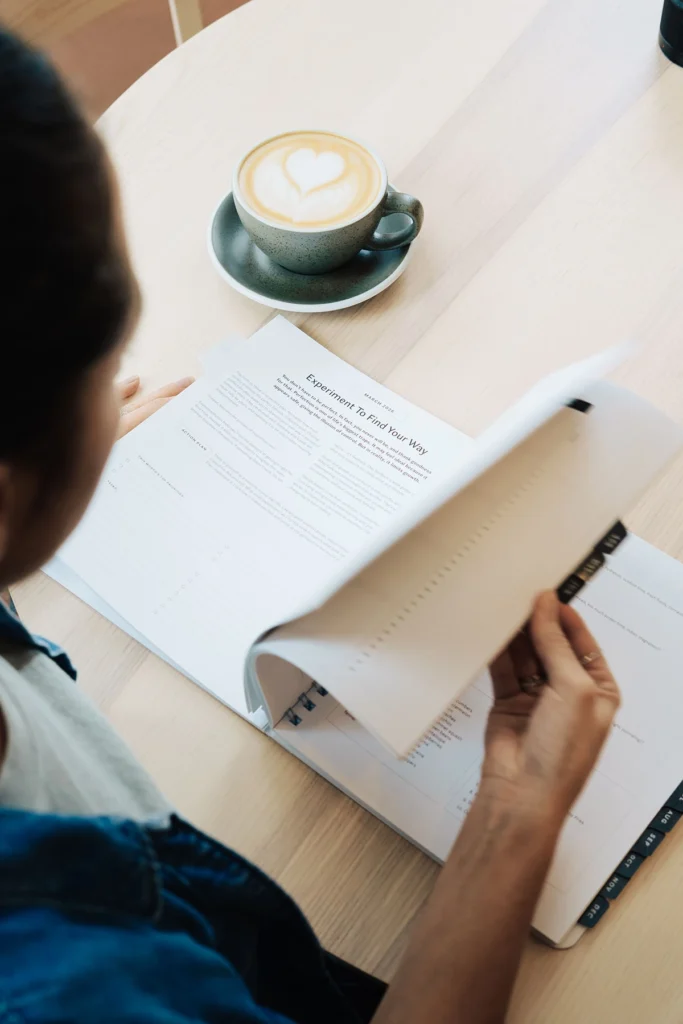
This is the exact reason I created the Nourished Planner. It’s to give you a physical space to write your plans, anchor your direction, and build rhythms that support a life you actually want to live.
It’s not about productivity or perfection. The Nourished Planner is about living with intention.
The Nourished Planner is a place to land your thoughts. A place to capture your direction. And a place to honor your health, your wellness, your creativity, and your everyday life.
If you want next year to feel grounded, steady, meaningful, and aligned, start with a plan you can write, hold, and live. Because the simplest hack is the one that works and that comes back to:
Write your plans. Create your direction.
Write the life you want to live, one day at a time.